|
|
AD-AS ANALYSIS: An economic model relating the price level and real production that is used to analyze business cycles, gross domestic product, unemployment, inflation, stabilization policies, and related macroeconomic phenomena. The AS-AD model, inspired by the standard market model, captures the interaction between aggregate demand (the buyers) and short-run and long-run aggregate supply (the sellers).
Visit the GLOSS*arama
|
|


|

|
|
Lesson 16: Perfect Competition | Unit 2: Short-Run Output
|
Page: 10 of 28
|
|
Topic:
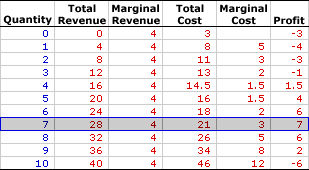
Comparing Marginals
|
|
|
|
|
|
|

|
|
DISEQUILIBRIUM, LONG-RUN AGGREGATE MARKET The state of the aggregate market in which real aggregate expenditures are NOT equal to full-employment real production, which results in an imbalance that induces a change in the price level and aggregate expenditures. In other words, the opposing forces of aggregate demand (the buyers) and aggregate supply (the sellers) are out of balance. At the existing price level, either the four macroeconomic sectors (household, business, government, and foreign) are unable to purchase all of the real production that they seek or producers are unable to sell all of the full-employment real production that they have.
Complete Entry | Visit the WEB*pedia |

|

|
PINK FADFLY
[What's This?]
Today, you are likely to spend a great deal of time at a garage sale trying to buy either one of those memory foam pillows or a remote controlled train set. Be on the lookout for small children selling products door-to-door.
Your Complete Scope
This isn't me! What am I?
|

|
|
One of the largest markets for gold in the United States is the manufacturing of class rings.
|

|
|
"Sometimes when you innovate, you make mistakes. It is best to admit them quickly and get on with improving your other innovations. " -- Steve Jobs, Apple Computer founder
|

|
SIC
Standard Industrial Classification
|

|
|
Tell us what you think about AmosWEB. Like what you see? Have suggestions for improvements? Let us know. Click the User Feedback link.
User Feedback
|

|