|
|
S&P 500: The abbreviation for the Standard & Poor's 500, an index of the prices of 500 corporate stocks traded on the New York Stock Exchange. It includes an assortment of stocks for industrial, transportation, and utility companies. It also includes a larger number of stocks than the comparable Dow Jones composite index, which means it's often considered a better measure of the overall performance of the stock market. Less commonly publicized are separate Standard & Poor's indexes for industrial, transportation, utility, and financial stocks.
Visit the GLOSS*arama
|
|


|

|
|
Lesson 7: Market | Unit 2: The Numbers
|
Page: 8 of 22
|
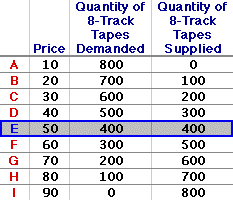
What would happen if buyers and sellers faced a price of 50 cents?- At 50 cents, the quantity demanded is 400 tapes.
- At 50 cents, the quantity supplied is 400 tapes.
- The quantity demanded is the same as the quantity supplied at this 50 cent price.
- This IS equilibrium.
- This equilibrium price and equilibrium quantity will remain until something else changes.
- This 50 cent price is the only one that matches the quantity demanded and the quantity supply
|
|
|
|
|

|
|
ELASTIC DEMAND The general demand relation in which relatively small changes in price cause relatively large changes in quantity demanded. Small changes in price cause relatively large changes in quantity demanded or the percentage change in quantity demanded is larger than the percentage change in price. This characterization of elasticity is most important for the price elasticity of demand. Elastic demand is one of two general elasticity relations for demand. The other is inelastic demand.
Complete Entry | Visit the WEB*pedia |

|

|
|
More money is spent on gardening than on any other hobby.
|

|
|
"If anything terrifies me, I must try to conquer it. " -- Francis Charles Chichester, yachtsman, aviator
|

|
SWIFT
Society for Worldwide Interbank Financial Telecommunications
|

|
|
Tell us what you think about AmosWEB. Like what you see? Have suggestions for improvements? Let us know. Click the User Feedback link.
User Feedback
|

|