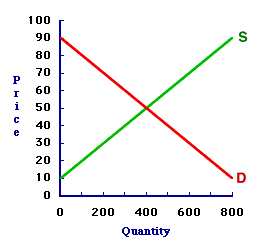
SELF CORRECTION, MARKET: The automatic process in which markets adjust from disequilibrium to equilibrium. With this self-correction process, the market price either increases or decreases in response to a shortage or a surplus to restore the balance between quantity demanded and quantity supplied. This process works automatically to achieve equilibrium without the need for outside intervention, such as government regulation.The self-correction process is an intrinsic aspect of voluntary market exchanges. Buyers seeking to pay the lowest price possible and sellers seeking to receive the highest price possible act to achieve and maintain equilibrium. If a market has a shortage, buyers are forced to bid the price higher, which eliminates the shortage and restores equilibrium. If a market has a surplus, sellers are forced to bid the price lower, which eliminates the surplus and also restores equilibrium. In and Out of BalanceTo see how the self-correction process of the market works, first consider three alternative prices--equilibrium price, low price, and high price. The equilibrium price, as the term suggests, generates equilibrium. The low price creates and shortage and the high price leads to a surplus.
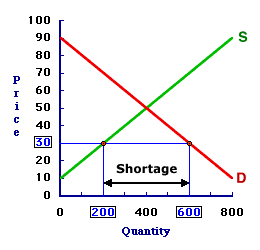
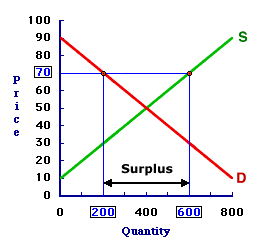
Low Price and ShortageOne disequilibrium condition that activates the self-correction process is a shortage caused by a price below the equilibrium. The shortage created by a 30-cent price for the 8-track tape market is reproduced in this exhibit. The quantity demanded is greater than the quantity supplied.Self-correction comes to the rescue for this imbalance. With a market shortage, buyers are not able to buy all of the good that they seek to buy. As such, they force the price up. Click the [Price Rise] button to illustrate what occurs when they do. This higher price operates on both demand and supply to eliminate the shortage. On the supply side, the higher price enacts the law of supply to trigger an increase in the quantity supplied. On the demand side, the law of demand comes into play as the price increase induces a decrease in the quantity demanded. Both quantity changes work to eliminate the shortage. The quantity demanded was too much, but the price increase causes it to decrease. The quantity supplied was too little, but the price increase causes it to increase. Eventually the price rises enough, the quantity demanded decreases enough, and the quantity supplied increases enough to eliminate the shortage and restore equilibrium. High Price and SurplusThe other disequilibrium condition that activates the self-correction process is a surplus caused by a price above the equilibrium. The surplus created by a 70-cent price for the 8-track tape market is reproduced in this exhibit. The quantity demanded is less than the quantity supplied.Self-correction also comes into play for this imbalance. With a market surplus, sellers are not able to sell all of the good that they seek to sell. As such, they force the price down. Click the [Price Fall] button to illustrate what occurs when they do. This lower price also operates on both demand and supply to eliminate the surplus. On the supply side, the lower price works the law of supply to trigger a decrease in the quantity supplied. On the demand side, the law of demand guides buyers as the price decrease induces an increase in the quantity demanded. Both quantity changes work to eliminate the surplus. The quantity demanded was too little, but the price decrease causes it to increase. The quantity supplied was too much, but the price decrease causes it to decrease. Eventually the price falls enough, the quantity demanded increases enough, and the quantity supplied decreases enough to eliminate the surplus and restore equilibrium. An Automatic ProcessBest of all this self-correction process is automatic. The surplus and shortage are eliminating automatically by price changes. It is almost as through the process is guided by an invisible hand. No government controls, regulations, or laws are need. The market relies on nothing more than buyers seeking to purchase the good at the lowest possible price and sellers seeking to sell the good at the highest possible price.Check Out These Related Terms... | shortage | surplus | excess demand | excess supply | sellers' market | buyers' market | market disequilibrium | disequilibrium price | market equilibrium | equilibrium price | equilibrium quantity | Or For A Little Background... | market | equilibrium | law of demand | law of supply | market clearing | voluntary exchange | And For Further Study... | market equilibrium, numerical analysis | market equilibrium, graphical analysis | competitive market | invisible hand | free enterprise | Recommended Citation: SELF CORRECTION, MARKET, AmosWEB Encyclonomic WEB*pedia, http://www.AmosWEB.com, AmosWEB LLC, 2000-2025. [Accessed: December 16, 2025]. |