|
|
CARDINAL: A measurement based on a scale or quantitative numbers, such as 1, 5, or 357.2, that enables a comparison in magnitude. Comparability means, for example, that the difference between 5 and 2 is the same as the difference between 12 and 9. Measures such as height and weight use cardinal numbers. Most economic measures are based on cardinal numbers, including gross domestic product, unemployment rate, the price of chocolate, and the quantity of wheat produced. The benefit of cardinal measurement is the ability to directly compare one measure with another. If, for example, the price of chocolate is $1 a pound and the price of wheat is $4 a pound, then wheat is four times more expensive than chocolate. Ordinal measures, which involve relative ranking, is an alternative type of measure.
Visit the GLOSS*arama
|
|


|

|
|
Lesson 20: Federal Reserve System | Unit 4: Monetary Policy
|
Page: 13 of 20
|
|
Topic:
Overview: Graphs
|
|
|
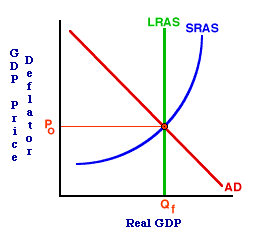
Expansionary monetary policy increases aggregate demand up to full employment and contractionary monetary policy decreases aggregate demand back to full employment.- Expansionary policy increases the money supply and shifts the AD curve rightward. This is used to correct a recessionary gap and achieve long-run equilibrium.
- Contractionary policy decreases the money supply and shifts the AD curve leftward. This is used to correct an inflationary gap and achieve long-run equilibrium.
- Note that monetary policy and interest rates are closely connected.
|
|
|
|
|

|
|
DETERMINANTS Ceteris paribus factors that are held constant when a curve is constructed. Changes in these factors then cause the curve to shift to a new location. The most common determinants are demand determinants for the demand curve and supply determinants for the supply curve. Other curves used in the analysis of economics also have notable determinants, including the production possibilities curve, the aggregate demand curve, the aggregate supply curve, and the short-run average cost curve.
Complete Entry | Visit the WEB*pedia |

|

|
PURPLE SMARPHIN
[What's This?]
Today, you are likely to spend a great deal of time waiting for visits from door-to-door solicitors hoping to buy either several magazines on computer software or a T-shirt commemorating the second moon landing. Be on the lookout for poorly written technical manuals.
Your Complete Scope
This isn't me! What am I?
|

|
|
The penny is the only coin minted by the U.S. government in which the "face" on the head looks to the right. All others face left.
|

|
|
"We succeed in enterprises (that) demand the positive qualities we possess, but we excel in those (that) can also make use of our defects." -- Alexis de Tocqueville, Statesman
|

|
X
Exports;Marks the Spot
|

|
|
Tell us what you think about AmosWEB. Like what you see? Have suggestions for improvements? Let us know. Click the User Feedback link.
User Feedback
|

|